Linked specification
Show the original request, acceptance criteria, constraints, and repository context that governed the work.
Coroid Dark Factory
Coroid turns clear specifications into verified pull requests with the evidence engineering teams need before they merge: requirements, implementation notes, tests, review signals, and deploy previews.
Proof before persuasion
A high-risk engineering platform should not rely on promises alone. Coroid surfaces the concrete handoff evidence that turns a generated change into a reviewable engineering deliverable.
Show the original request, acceptance criteria, constraints, and repository context that governed the work.
Show the branch, changed files, implementation summary, and the exact review state a developer receives.
Attach test output, CI status, preview deployments, scanner results, coverage, visual checks, or E2E results.
Summarise trade-offs, known limits, follow-up work, and independent review signals before asking for a merge.
Example handoff
Specification
Acceptance criteria, constraints, and repository context are attached to the task.
Change package
Implementation summary, changed files, and branch status are visible in one place.
Test evidence
Tests, scanner output, preview URLs, and CI results are collected as evidence.
Review notes
Coroid reviewer output and external review signals are prepared for the human reviewer.
Product proof
The proof path now follows one concrete task from specification intake through agent execution, QA, review, Git handoff, approval, and the finished product result. The preview-only screenshots are intentionally left out because that workflow is being retired.
01 / Specification
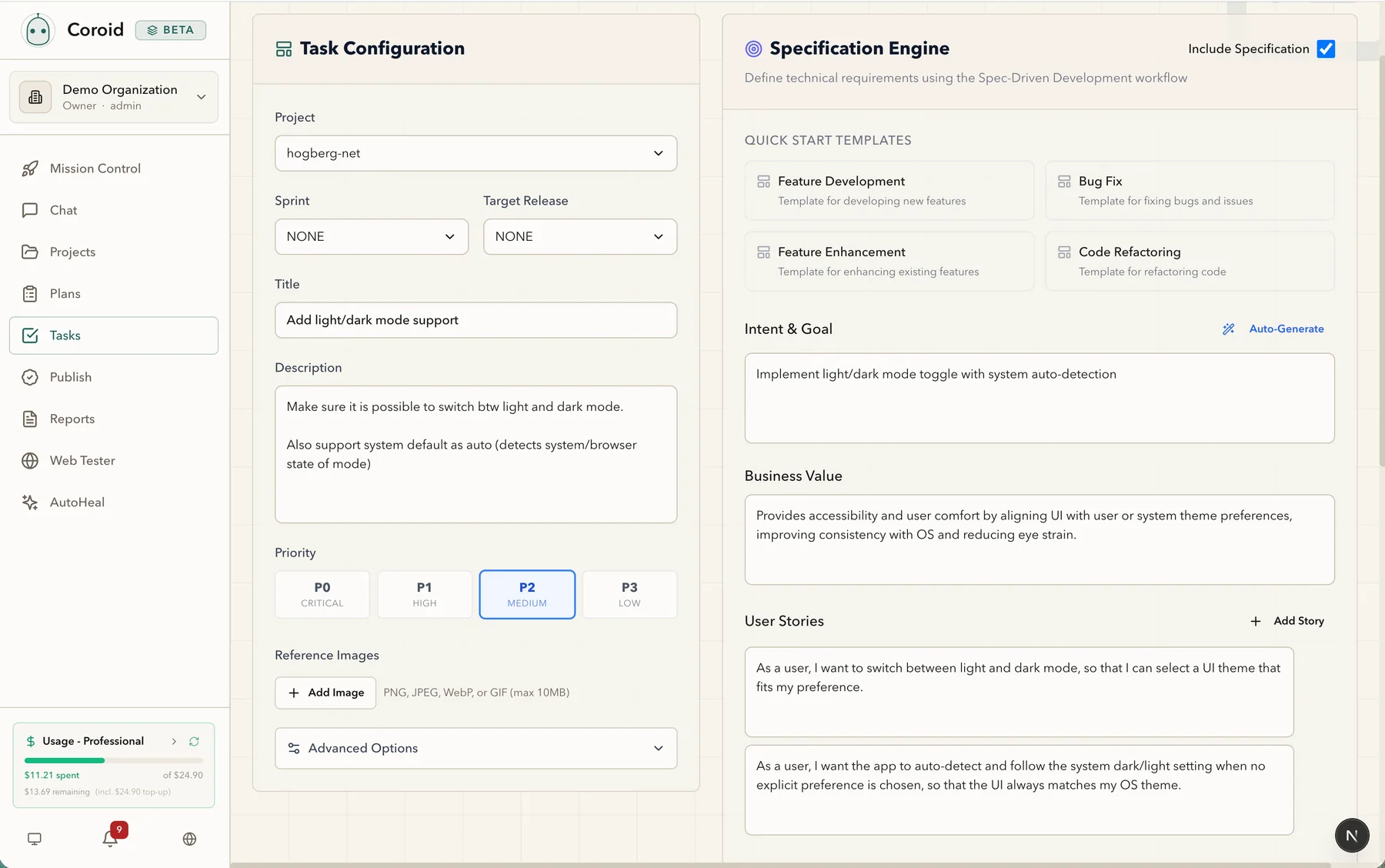
This screen shows the new task flow where a user defines title, priority, repository, intent, business value, user stories, and acceptance criteria before agents touch the code.
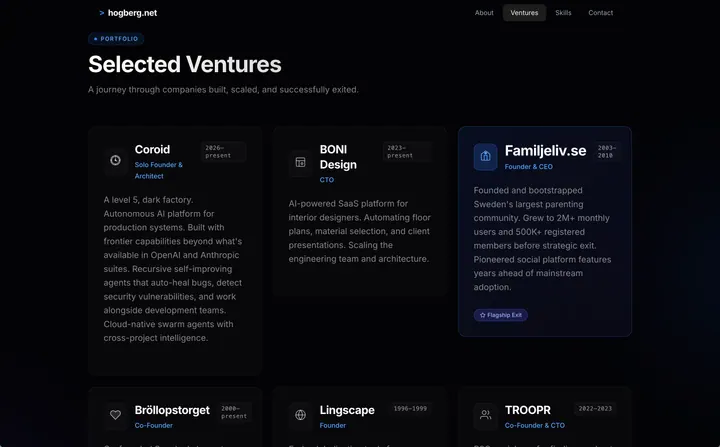
The task starts from the existing customer product state.
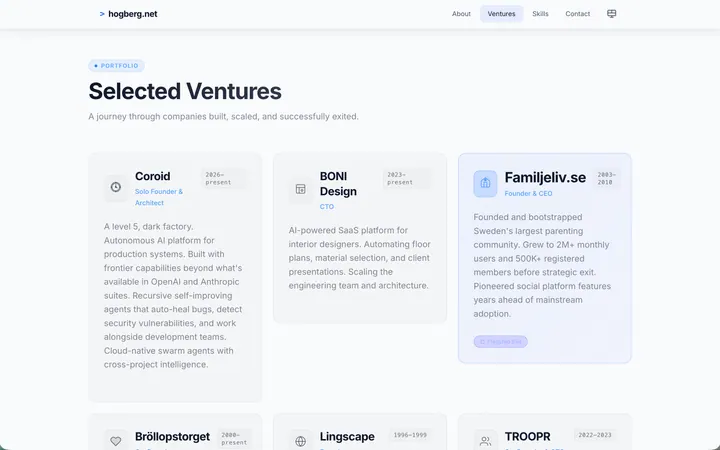
The completed implementation supports the requested light theme.
The same implementation keeps the dark theme polished.
A 2000s Aero-style direction demonstrates creative visual transformation work.
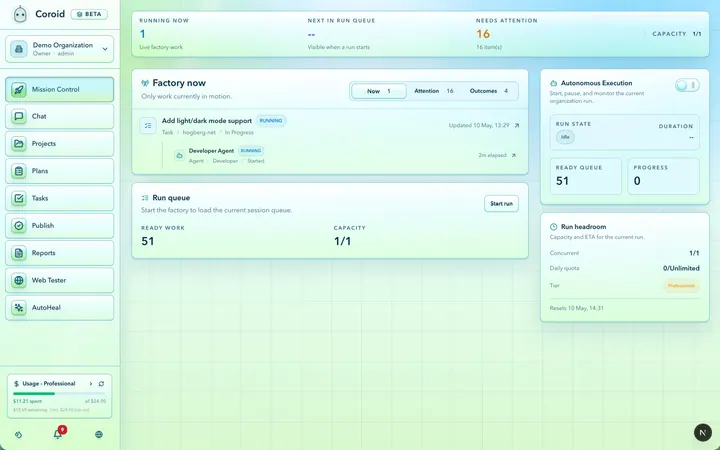
Mission Control
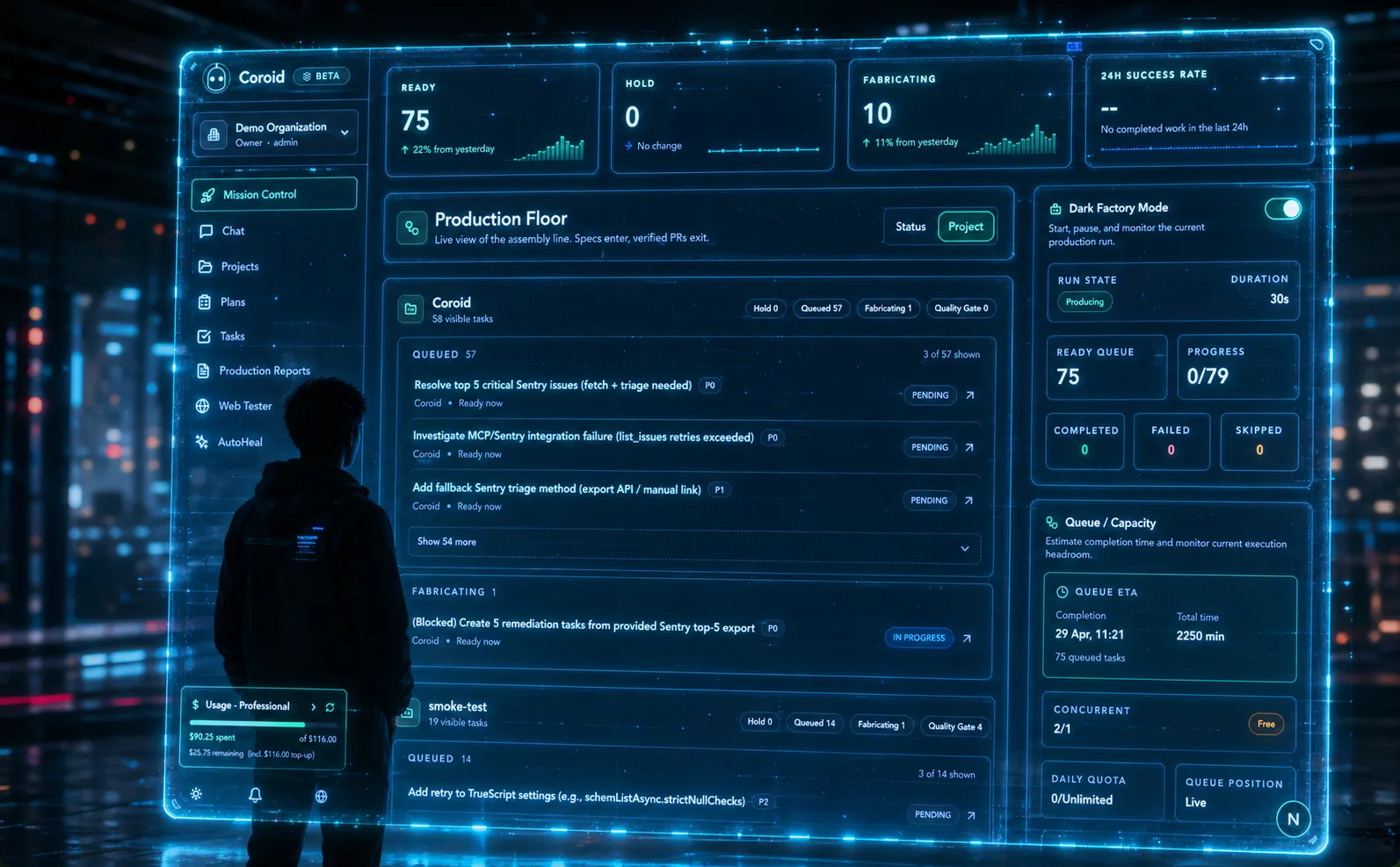
Turn on autonomous execution and Coroid orders ready backlog items, groups related work, runs the plan through specialised phases, and returns reviewed pull requests for approval.
Running now
1
Live factory work
Needs attention
16
Human decisions queued
Ready queue
51
Prioritised backlog items
Capacity
1/1
Autonomous run headroom
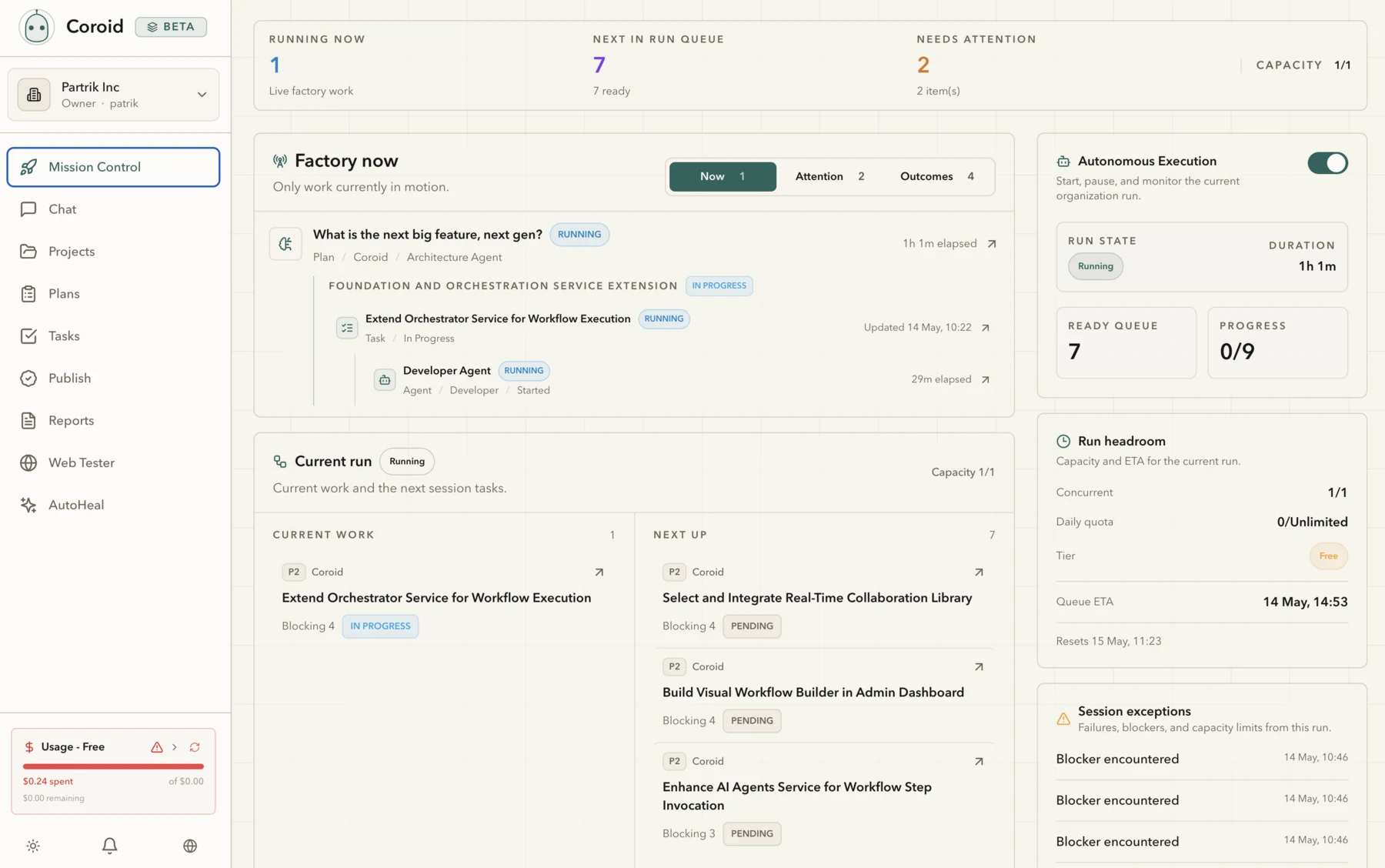
Mission Control loads ready work by priority, dependencies, release context, and sprint state.
Related tasks are grouped, scoped, and given implementation plans before code is generated.
Architect, developer, QA, and reviewer workstations move each item through a visible delivery path.
Autonomous execution keeps processing while completed work waits at a human approval gate.
Dark Factory is not another autocomplete surface. It is for complete backlog items that need planning, implementation, verification, and a clean handoff.
Turn well-scoped feature requests, UI updates, and integration tasks into reviewable pull requests.
Add missing tests, clean brittle flows, improve error handling, and reduce recurring support issues.
Move old patterns forward with small, verifiable changes instead of one risky rewrite.
Document edge cases, improve observability, tighten CI checks, and keep delivery moving.
Review evidence
Coroid connects the pull request to the tools teams already trust: preview deployments, mobile builds, AI review, security scans, coverage, visual checks, and E2E results.
Discover PR previews from GitHub, GitLab, Vercel, Netlify, Cloudflare, Render, Railway, Heroku, Fly, and similar platforms.
Surface external AI reviewers and scanner comments alongside Coroid's own reviewer so humans can compare evidence before merging.
Attach coverage, static analysis, dependency risk, visual review, E2E, and performance evidence to task and lane reviews.
For Coroid-only projects, deploy temporary reviews directly to customer-owned Vercel, Netlify, or Cloudflare Pages accounts.
Coroid is designed to feel like infrastructure for software delivery: restrained, observable, and accountable.
No local IDE extension or workstation dependency. Agents run in controlled cloud workspaces.
Specialised agents coordinate around one clear specification instead of producing disconnected suggestions.
The factory validates against acceptance criteria before the work reaches your review queue.
It is Coroid's Level 5 software production model: cloud agents work from a clear specification and produce verified pull requests without requiring a developer to supervise every generated line.
Each task moves through architecture, implementation, QA, and review stages. The specification and acceptance criteria stay visible, and the output is checked before handoff.
No. Coroid is cloud-based. Your team writes specifications in the browser and receives pull requests from isolated agent environments.
Start with one concrete backlog item. If the spec is clear, the Dark Factory can plan it, build it, test it, and hand you a pull request.